
Rhun ap Iorwerth was sworn in as First Minister of Wales on Tuesday afternoon, becoming the first politician from a party other than Welsh Labour to hold the office since devolution began in 1999.
The Plaid Cymru leader's inauguration, five days after one of the most consequential elections in Welsh political history, completes a transfer of power that few predicted a year ago. Plaid Cymru won 43 of the 96 seats in the expanded Senedd on 7 May. Reform UK finished second with 34 seats, while Labour, which has led every Welsh government since the Assembly was established, was reduced to just nine.
The scale of the defeat ended Eluned Morgan's premiership. She resigned on 8 May, the morning after the count, bringing to a close more than a century in which Labour had been the dominant force in Welsh public life.
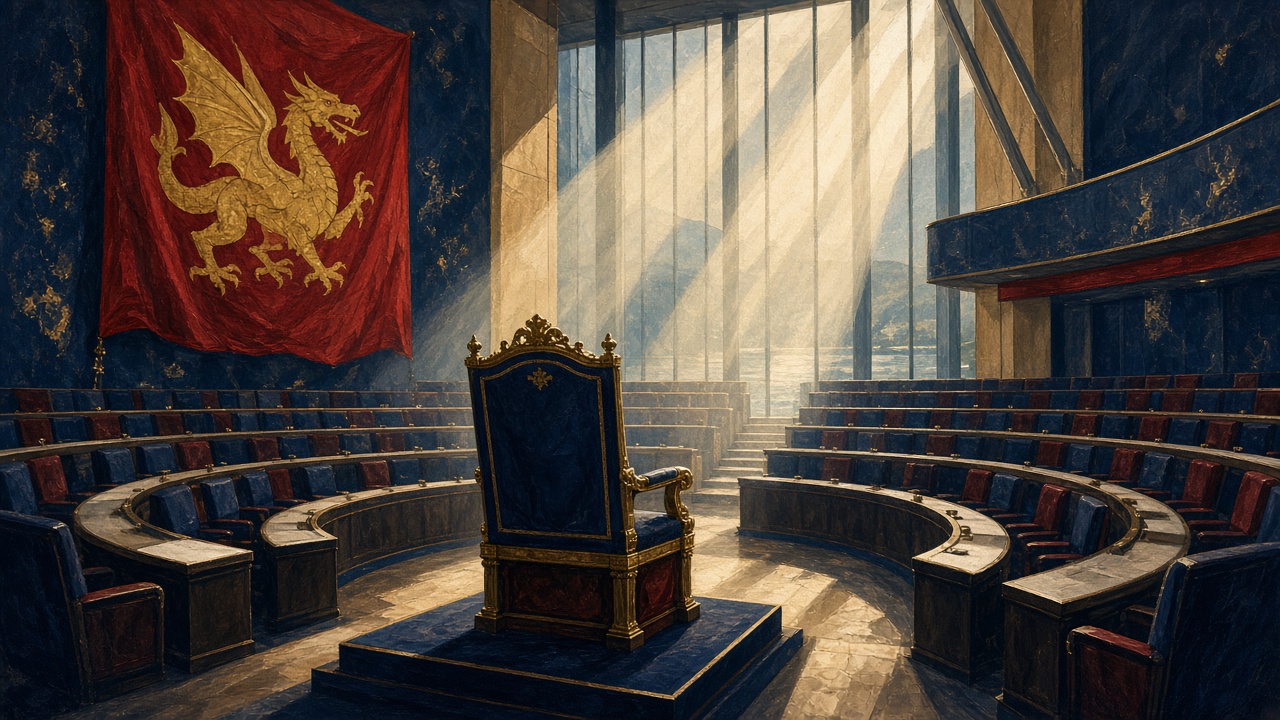
The swearing-in took place in a Senedd that has been utterly transformed. Plaid members occupied the government benches for the first time, Reform UK's sizeable contingent took their seats as the second largest party, and Labour's surviving nine Members of the Senedd faced the unfamiliar geography of the margins.
Reaction from Westminster was respectful but guarded. Unionist parties acknowledged the historic nature of the result while insisting that the ties between Wales and the rest of the United Kingdom remain strong. Within Welsh Labour, the recriminations have already begun, with senior figures describing the defeat as a generational reckoning for a party that had come to treat Wales as its own.
A new government takes shape
Mr ap Iorwerth formed his government the following day, appointing new ministers to the Welsh Cabinet and signalling that his administration would be judged first on the everyday business of devolved government: the health service, schools, transport and the cost of living.
Those close to the First Minister describe his priorities as practical rather than constitutional: bearing down on NHS waiting times, supporting the rural economy, expanding the everyday use of the Welsh language and pressing Wales's case for fair funding. He must do so without a majority. Plaid's 43 seats leave it six short of the 49 needed for outright control, so every budget and every bill will require negotiation.
Wales's New Political Landscape
- Plaid Cymru won 43 of the 96 Senedd seats in the election on 7 May 2026.
- Reform UK finished second with 34 seats; Labour fell to nine, its worst result in Wales.
- Rhun ap Iorwerth is the first First Minister from outside Welsh Labour since devolution in 1999.
- Eluned Morgan resigned on 8 May, the day after the election.
- The new Welsh Cabinet was appointed the day after the swearing-in.
Independence raised with the Prime Minister
On 19 May the First Minister confirmed that he had raised the question of Welsh independence during a telephone call with Sir Keir Starmer. A Welsh Government spokesman said the Prime Minister had been open to the idea of giving the Senedd more law-making powers, an early indication of how the relationship between Cardiff Bay and Westminster may develop.
Plaid Cymru is committed in principle to an independent Wales, and the scale of its victory has given that question a prominence it has never held in the devolved era. Yet the new government has been careful to put delivery before constitutional campaigning, aware that many who lent it their votes were moved by frustration with Labour rather than by enthusiasm for independence.
For the Union, the result poses a quieter but no less serious question than the one long posed by Scotland. Wales was regarded in Westminster as the most settled of the devolved nations. That assumption can no longer be made. A Plaid First Minister raising independence with a Labour prime minister would have seemed unthinkable eighteen months ago; this month, it is simply the business of government.
Reform UK, now the second force in the Senedd, becomes the opposition in all but name, while Labour's nine members begin the long work of rebuilding. The new Senedd returns next week with a new government, a new opposition and a question over Welsh politics that will not now go away.