
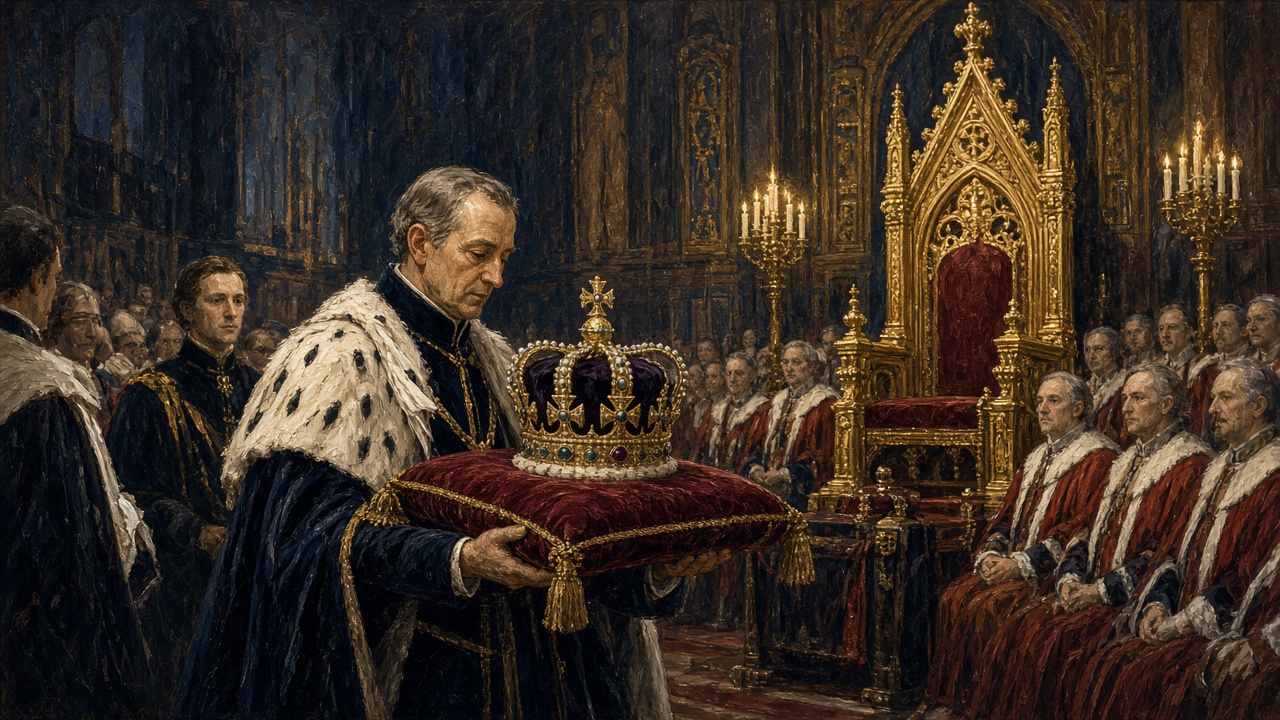
The King arrived at the Palace of Westminster shortly before noon on Wednesday to open the new session of Parliament, reading a legislative programme drafted in the most testing circumstances Sir Keir Starmer's government has yet faced.
The State Opening came six days after Labour's local election mauling, and the distance between the constitutional splendour on display and the political weakness of the government of the day was lost on no one in the Lords chamber.
The King, wearing the Imperial State Crown and the Robe of State, read the speech from the throne. Earlier, in the ancient choreography of the occasion, the door of the Commons chamber had been ceremonially shut against Black Rod, who struck it three times before being admitted to summon MPs. The Commons then processed through the Central Lobby to the bar of the Lords, led by the Prime Minister and the Leader of the Opposition, to hear their own government's words read in the monarch's voice.
Among the peers and MPs packed into the chamber, the mood was described by those present as subdued rather than celebratory. The galleries were full, the ermine was out, and the applause, when it came, was loudest from the benches with the least to lose.
A King's Speech is, by convention, the government's text and the sovereign's voice. This one arrives with the authority of its authors visibly diminished. The programme set out on Wednesday must now be carried through Parliament by a party that has just been punished at the ballot box and is openly questioning its own leadership.
A session already marked by division
The speech lands in a parliamentary session that has already tested the government's majority and its nerves. The Courts and Tribunals Bill, which restricts the right to trial by jury in some cases, passed its first Commons vote by 304 votes to 203, a margin that reflected unease on the government benches as much as opposition from the other side.
Peers, meanwhile, have approved the abolition of the remaining 92 hereditary peerages, ending a presence in the Lords that stretches back centuries and removing one of the last anomalies of the unreformed upper house. The Terminally Ill Adults (End of Life) Bill continues its passage, commanding free votes and raw emotion on both sides of both chambers.
The Session So Far
- The State Opening took place on 13 May 2026, six days after the local elections.
- The Courts and Tribunals Bill passed its first Commons vote by 304 votes to 203.
- Peers approved the abolition of the remaining 92 hereditary peerages.
- The Terminally Ill Adults (End of Life) Bill continues its passage through Parliament.
- Wes Streeting resigned as Health Secretary on 14 May, the day after the speech.
Theatre that cannot hide the arithmetic
The fragility beneath the pageantry became unmistakable the following morning, when Wes Streeting resigned as Health Secretary, telling colleagues he had lost confidence in the Prime Minister. The departure of one of the government's most prominent figures turned a difficult week into a crisis of confidence, and ensured that the debate on the address would double as a referendum on Sir Keir's leadership.
There is a purpose to the theatre. The crown, the robes, the gilded coach and the summoned Commons exist to remind governors and governed alike that the state endures beyond the fortunes of any single administration. Governments come and go; the Crown opens Parliament regardless. On Wednesday, that continuity felt less like reassurance and more like contrast.
What follows will test the institution as much as the ministry. The government must steer its programme through a restive Commons and an assertive Lords with a parliamentary party whose confidence has been badly shaken. Every close vote will now be read as a verdict not only on the bill in question but on the Prime Minister's remaining authority.
The Commons returns on Thursday to begin the debate on the address, the set-piece discussion of the speech that opens the session. It will be well attended. For the first time in this Parliament, the government's own backbenches may be the most interesting audience in the room.