
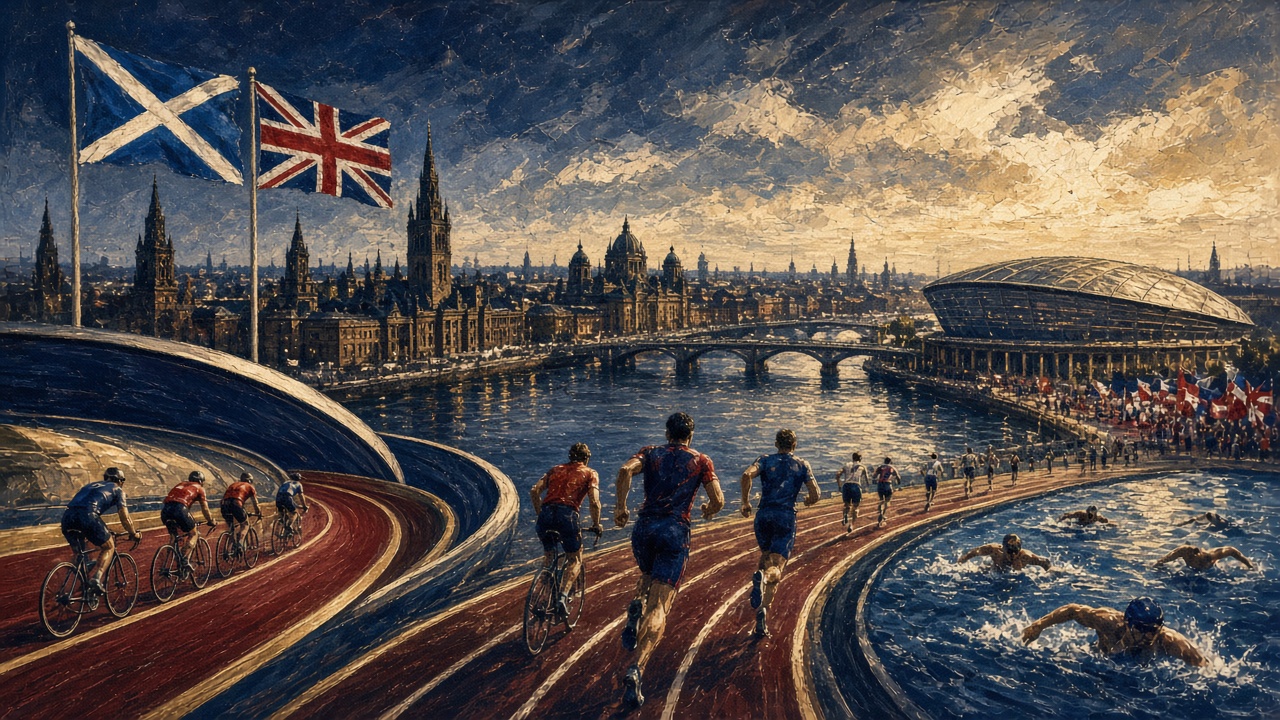
Eleven days, ten sports, 215 medal events and one city that refused to let the occasion shrink. The XXIII Commonwealth Games closed in Glasgow on Sunday night having answered every question asked of them, a slimmed down Games that felt, in the moments that mattered, anything but small. Australia topped the medal table, England finished second, and Scotland, the hosts who stepped in when the Games needed saving, enjoyed the time of their lives.
The final table told a familiar story at the summit. Australia's 70 golds and 171 medals confirmed their customary dominance of this event. England's second place, built on 29 gold, 45 silver and 36 bronze for a total of 110, was a robust return from a team that medalled across the entire programme. Canada took third with 62 medals and India fourth with 39, but the table's happiest line belonged to the hosts: Scotland fifth, with 13 gold, 9 silver and 17 bronze, every one of them roared home by crowds that made these Games feel like a national celebration.
From the first morning of competition to the last night of celebration, the city wore the Games lightly and proudly. Venues from the track to the pool to the velodrome hummed with crowds who seemed to understand that they were not merely watching sport but making a case: that a Games need not be vast to be vivid. Glasgow, a city that knows a thing or two about reinvention, offered a template in plain sight.
Home nations rise to the occasion
Scotland's Games were built in the pool, where the home crowd found heroes night after night. Duncan Scott, the elder statesman of British swimming, added the men's 200m individual medley title to his formidable collection. Stephen Clegg won the 50m freestyle S13, Angharad Evans swept the women's 100m and 200m breaststroke double, and Faye Rogers took the 200m individual medley SM10. The roar that greeted each home finalist became the soundtrack of the Games.
There was Welsh history in the cycling too, where Emma Finucane completed a historic four gold sweep, a feat that will echo through the annals of Welsh sport. Wales finished ninth with nine golds among their 31 medals, while Northern Ireland took twelfth place with three golds in a haul of 16, each one cheered as if it were the first. For the home nations, taken together, these were eleven days that repaid every hour of preparation. For Scotland's swimmers in particular, these Games will be remembered as a coming of age performed in front of their own people.
Glasgow 2026 at a Glance
- The XXIII Commonwealth Games ran from 23 July to 2 August, with 215 medal events across ten sports.
- Australia led the medal table with 70 golds and 171 medals; England were second with 29 gold, 45 silver and 36 bronze (110).
- Canada finished third with 62 medals and India fourth with 39.
- Hosts Scotland placed fifth with 13 gold, 9 silver and 17 bronze (39).
- Emma Finucane completed a historic four gold sweep in the cycling.
- Wales finished ninth with nine golds and 31 medals; Northern Ireland twelfth with three golds and 16.
A smaller Games, and a larger question
Glasgow's Games were born of necessity, staged after the city stepped in to host, and built around a deliberately lean ten sport format. The purists worried; the crowds did not. Venues were full, the city embraced its guests, and the stripped back programme gave the Games an intimacy that recent, more bloated editions have lacked. The question now is whether the Commonwealth movement learns the lesson: that the future of this event may lie not in scale but in soul. With the centenary of the first Games, held in Hamilton in 1930, approaching at the end of the decade, the movement has a story to tell about its past and, thanks to Glasgow, a workable sketch of its future.
As the flags came down on Sunday evening, the athletes of 2026 dispersed with medals, memories and, for the home nations, momentum. England's second place, Scotland's golden Games, Welsh history and Northern Irish pride: the union's sporting family argued and celebrated in equal measure, which is to say it behaved exactly like a family. Glasgow asked little of the Commonwealth Games. It gave them back their purpose.