
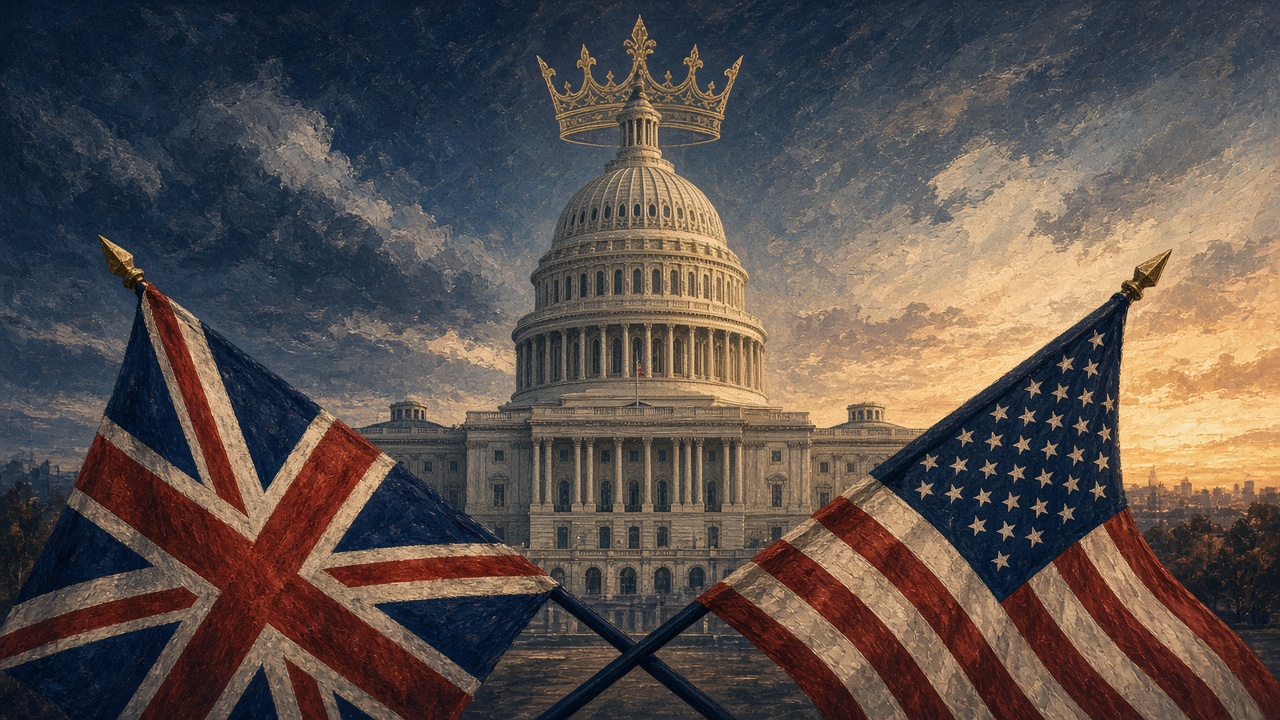
The King and Queen have concluded a state visit to the United States conceived in celebration and conducted at a moment of unusual delicacy, as America marks the 250th anniversary of its independence and the transatlantic relationship endures what many regard as its lowest ebb in modern times.
Buckingham Palace confirmed the visit on 31 March, and from that moment every step of the choreography was scanned for hazard. Months of tariff tensions had bruised the economic relationship. President Donald Trump's remarks about Greenland had unsettled allies. His public questioning of NATO had left European capitals wondering whether the Atlantic alliance would survive its eighth decade in recognisable form. Into all of this walked a 77 year old monarch armed with no vote, no veto and no instrument beyond presence.
On Tuesday 28 April, the King addressed a joint meeting of Congress, an honour extended to few foreign leaders and never before to a British monarch. He spoke of the "eternal bond" between the two nations, and then, invoking the spirit of Magna Carta, he reminded his audience of "the principle that executive power is subject to checks and balances". In a chamber that has spent the year arguing about precisely that question, the words landed with a weight no communiqué could have carried.
The speech was received with a warmth that crossed party lines. Lawmakers who had arrived curious rose to applaud, and the applause, by every account from the chamber, was neither polite nor brief.
Jokes, and a few gentle challenges
Those who expected a lecture were disarmed. The King cracked jokes, teasing his hosts gently about the unhappy business of 1776 and the curious fact that two nations divided by a revolution have ended up divided mainly by a common language. At the White House he met President Trump and, by the account of those briefed on the talks, challenged him politely on several points of recent disagreement. The royal method is not confrontation but calibration: a raised eyebrow here, a well timed jest there, a reference to history that leaves the listener to draw the conclusion.
The humour mattered as much as the substance. Laughter lowers shoulders, and shoulders had been up around ears in Washington for months. Commentators on both sides of the Atlantic have since called the visit an historic success, a verdict rarely attached to any diplomatic enterprise in this most disputatious of years.
The Visit at a Glance
- Buckingham Palace confirmed the state visit on 31 March 2026.
- The King addressed a joint meeting of the US Congress on Tuesday 28 April.
- The visit formed part of the 250th anniversary of American independence.
- The 77 year old King met President Donald Trump at the White House.
- The trip followed months of tariff tensions and public disagreement over Greenland.
- Commentators on both sides of the Atlantic judged the visit an historic success.
The monarch as diplomat
Beneath the pageantry lay purpose. At a moment when the President had publicly questioned NATO, the King used the language of shared sacrifice and shared security to bolster the alliance without ever naming the controversy. It is the oldest trick in the monarchy's book: to say everything, and to be able to deny having said anything in particular. The Crown cannot negotiate treaties, but it can do what no elected politician can, embodying a continuity that stretches back further than any republic on earth.
Sceptics will ask what four days of ceremony can concretely achieve, and the honest answer is that soft power is soft. But alliances are made of sentiment as much as steel, and sentiment had been running short. This week, Britain's most distinctive diplomatic instrument was played with a virtuosity that even Washington's professional sceptics conceded.
The anniversary year will produce louder celebrations in July. It is unlikely to produce a more consequential British contribution than the one made this week by a man whose constitutional job description, on paper, barely exists.