
King Charles has arrived in Guyana for the second leg of his Caribbean tour, a day after Buckingham Palace described the Bahamas visit as a "sensitive balancing act" and a "diplomatic success". He took a guard of honour from the Guyana Defence Force on arrival. The two-day state visit is built around the environment, sustainability, and the commercial ties between Britain and one of the fastest-growing economies in the world.
He is due to meet President Irfaan Ali and to attend a state reception marking 60 years of relations between the two countries. After Guyana he flies to Antigua and Barbuda, where he will open the Commonwealth Heads of Government Meeting on Sunday 1 November, in his role as head of what the Palace calls the family of nations. The shape of that summit was set before he left London.
What the Palace says the Bahamas visit achieved
The King left Nassau on Thursday. A spokesman said the islands had "a special place in the King's heart", and that "the great wall of cheers he received when greeting crowds will echo long in his memory". The programme had taken him to young boxers, environmentalists and politicians. On the second day he joined a Junkanoo parade. That dance, and the protest beside it, is the picture the tour will be judged by.
In his only public speech of the tour so far, given at the first engagement in the Bahamas, he referred to Britain's part in the slave trade and acknowledged the suffering of the past. The spokesman said the King had hoped the visit would celebrate a modern partnership, address shared challenges, and "acknowledge the great injustices of the past in a respectful way". A small number of protesters carried signs reading "pay us what you owe us". Their presence did not stop the engagements. It did make the Palace's phrase, diplomatic success, a claim rather than a fact everyone in Nassau would sign.
The Rest of the Caribbean Tour
- Friday and Saturday: state visit to Guyana. Audience with President Irfaan Ali, and a reception for 60 years of relations.
- Themes in Georgetown: rainforest, sustainability, and trade. More than four fifths of Guyana is forest.
- Sunday 1 November: the King opens CHOGM in Antigua and Barbuda and will speak as Head of the Commonwealth.
- Commonwealth leaders are expected to discuss the legacy of slavery. Reparations calls followed him through the Bahamas.
Why Guyana is a different conversation from Nassau
Guyana, formerly British Guiana, found oil in 2015 and has since become the world's fastest-growing economy. More than four fifths of the country is rainforest, and it has one of the lowest rates of deforestation in the world. That combination, new oil wealth and an old forest, is the brief the King has been given. It suits the part of his public life that has always been about the environment. It also sits next to a British energy debate at home, where North Sea fields and household bills are the Treasury's problem, not the Palace's.
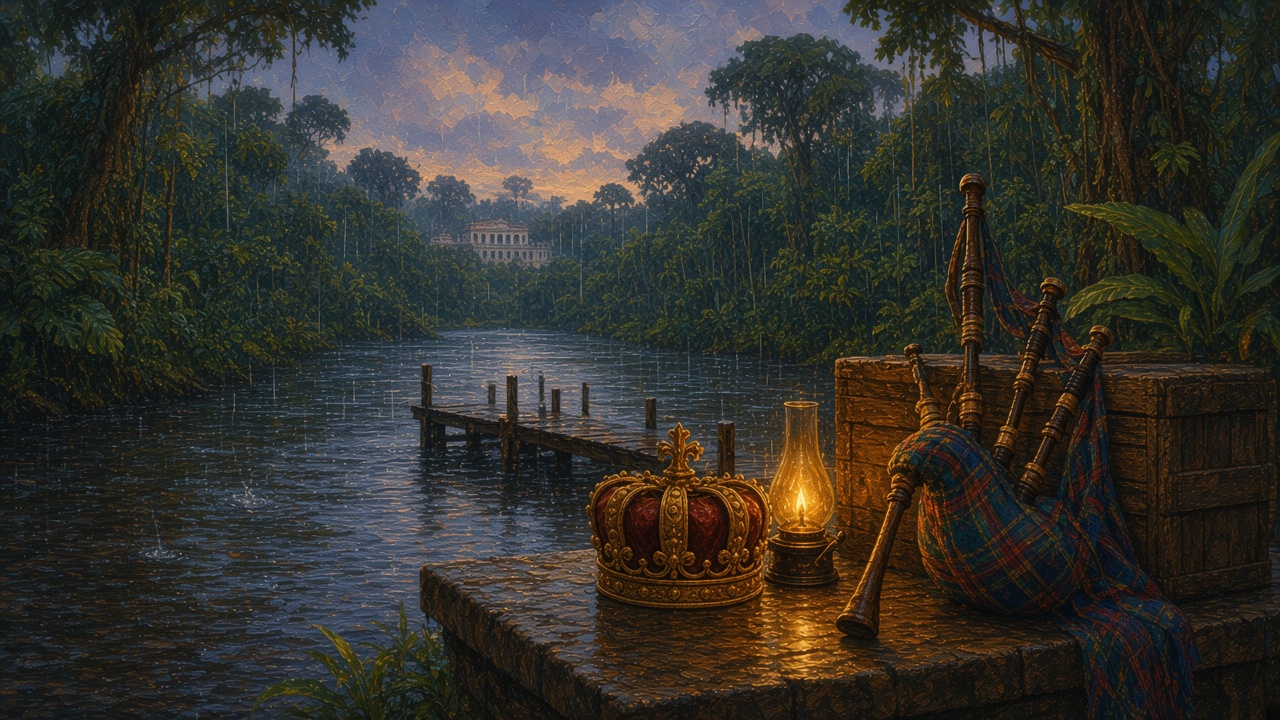
Culture is on the programme as well. Bagpipers from the National Piping Centre in Scotland are travelling with the tour. The image is deliberate: a Commonwealth that still borrows each other's music, on a visit whose harder subject is what the old empire owes.
What CHOGM will ask him to say
The Commonwealth summit in Antigua and Barbuda will discuss the legacy of slavery. Caribbean governments have renewed calls for Britain to apologise for its role in the trade and to offer reparations. The King will speak as Head of the Commonwealth. He will not, on any reading of his constitutional role, announce a payment. The speech in Nassau is the outer edge of what he has been willing to say in public: suffering acknowledged, partnership offered, the bill left to governments.
For readers following the tour from Britain, the useful distinction is between ceremony and policy. The guard of honour, the Junkanoo, the bagpipes and the state reception are the King's to carry. An apology with money attached is for ministers. Andy Burnham's government has not put a reparations figure on the table. CHOGM will ask the question anyway, with the King in the room as head of the association and as the most visible heir of the history under discussion.
Georgetown is the pause between those two pressures. Two days on forest and trade, then a flight to Antigua, where the cheers of Nassau will matter less than the sentence he chooses on Sunday.