
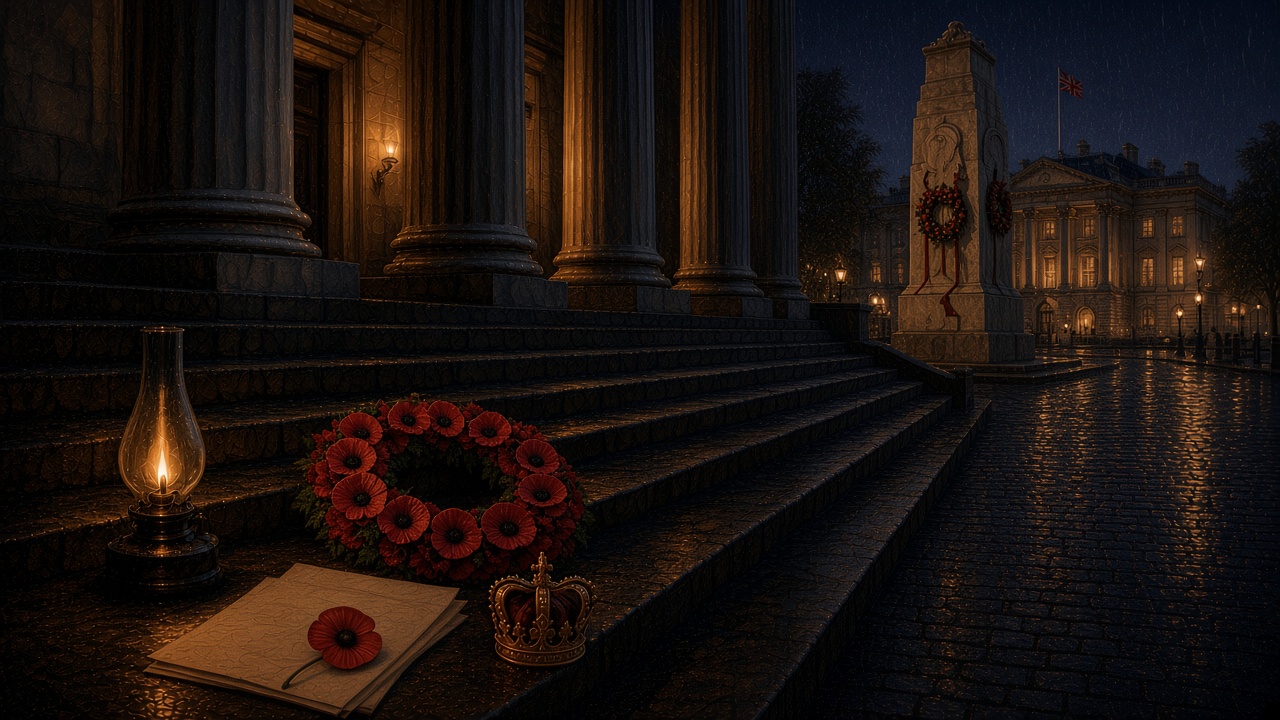
The two-minute silence has been held. King Charles led it at the Cenotaph at 11 on Sunday, then laid the first wreath, in the annual service that marks the Armistice and every conflict since in which British and Commonwealth forces have served. Prime Minister Andy Burnham and Conservative leader Kemi Badenoch laid wreaths on Whitehall. The Independent's front page counted a record nine former prime ministers in the political line. Monday's papers led with those photographs. The King does not make a speech at the Cenotaph. The silence is the point, and it is over.
About 10,000 veterans marched past, from more than 300 armed forces and civilian organisations. The youngest was seven. Some in the column are over 100, among the last who served in the Second World War. Veterans had travelled from Canada and Australia. About 10,000 people lined Whitehall. The BBC, ITV and Sky carried the service. While the country stood still, about 6,500 UK personnel remained deployed, including with NATO allies in eastern Europe and on the continuous at-sea deterrent. Sunday morning's report set out that order of service. It happened as billed.
Saturday night, then the wreath
The Cenotaph followed the Royal British Legion Festival of Remembrance at the Royal Albert Hall on Saturday, the King's first official appearance with the wider family since he and Queen Camilla left the Caribbean on Wednesday. The King, the Queen, the Prince and Princess of Wales, the Princess Royal, the Duke and Duchess of Edinburgh and the Duke and Duchess of Gloucester were there with serving personnel, veterans and families. The festival was built around individual stories, told in part through blueys, the light-blue airmail letters sent home from operations. It marked British operations in Bosnia, in which 59 personnel died, the 35th anniversary of the Gulf War, and Iraq under Operation Telic.
Sunday's ceremony is the fixed script. A wreath, a silence, a march. The political week around it is not fixed. The King and Queen came home from a nine-day tour of the Bahamas, Guyana and Antigua, where the argument was sorrow for the slave trade without an apology, a line that stays with ministers rather than with the Palace. Remembrance is a different room. Nine former prime ministers in one photograph is a record of how often the office has changed hands, not a comment from the King. He laid the wreath and left the speeches to others. There were none from him.
What Sunday Was
- The King led the two-minute silence at 11am and laid the wreath.
- Andy Burnham and Kemi Badenoch laid wreaths. Papers counted nine former prime ministers.
- About 10,000 veterans marched, from a child of seven to veterans over 100.
- About 6,500 UK personnel stayed deployed during the service.
- The Festival of Remembrance was at the Royal Albert Hall on Saturday night.
The queue that did not march
The same Sunday papers carried the other half of the morning. Mental injury claims under the Armed Forces Compensation Scheme averaged 186 working days in 2025-26, close to double the wait of 2020-21. The Ministry of Defence said it was using overtime and putting the terminally ill first. The Commons is in recess today, so there is no statement to answer that queue. The march is finished. The files are not.
The King is not the government's voice at the climate talks that open in Turkey this morning. Miatta Fahnbulleh is leading the British delegation in Antalya. His public part of this weekend was Whitehall and the Albert Hall, four days after the Caribbean. The Palace aide who called him a secret weapon for ministers was talking about that tour. Remembrance does not need the phrase. It needs the silence, and it has had it.