
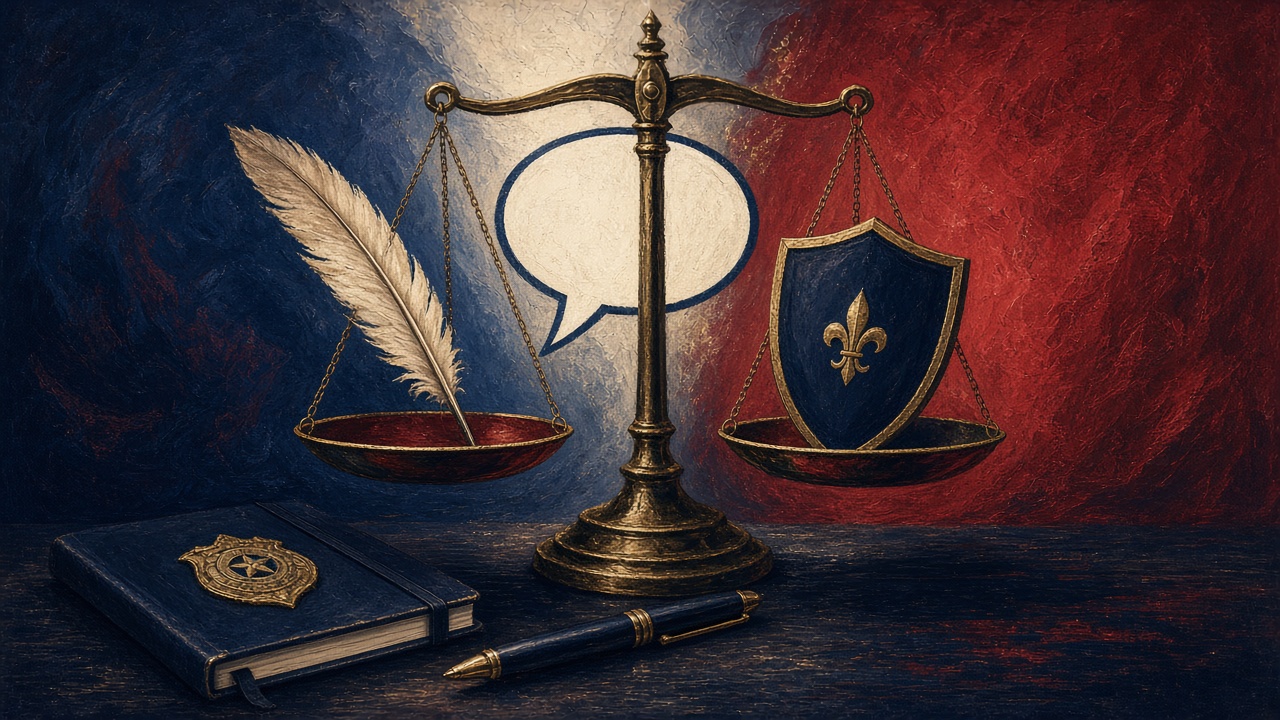
The government has announced a sweeping overhaul of the rules governing non-crime hate incidents, the controversial records that police forces keep of alleged hostility which falls short of a criminal offence.
The changes, confirmed on Tuesday, are expected to raise the threshold for recording such incidents, tighten the guidance given to officers and place a new emphasis on protecting lawful free expression. They amount to the most significant revision of the system since it was introduced, and they reopen a long argument about where the line should fall between protecting the public and policing speech. The review follows years of legal challenges and political argument about the system.
What non-crime hate incidents are
A non-crime hate incident is an incident perceived by the victim, or by any other person, to be motivated by hostility towards a protected characteristic such as race, religion, disability, sexual orientation or transgender identity, but which does not meet the threshold for a criminal offence. Under national guidance, forces in England and Wales have recorded such reports for more than a decade, building a picture of hostility in communities even where no crime has been committed.
The records are not convictions, and no offence is implied by them. Yet they are not without consequence: in some circumstances a recorded incident can surface on an enhanced vetting check, and critics have long argued that recording a person's name in connection with a hate incident, where no crime was found, amounts to punishment without process.
Non-Crime Hate Incidents Explained
- A non-crime hate incident is a report of perceived hostility that does not meet the criminal threshold.
- Police forces in England and Wales have recorded them under national guidance for more than a decade.
- Records can in some cases appear on enhanced vetting checks.
- Free speech campaigners argue the system chills lawful expression.
- Supporters say the records help police identify patterns of hostility before they escalate into crime.
- The overhaul is expected to raise recording thresholds and tighten guidance to officers.
Free speech organisations have campaigned against the system for years, arguing that it draws police into disputes over lawful opinion and chills expression. Officers, they say, have been called upon to record arguments on the street and posts on social media that broke no law, and the knowledge that a complaint can leave a lasting mark has deterred people from speaking at all.
On the other side, community groups and some senior officers argue that the records serve a genuine protective purpose. Hostility that is not yet criminal can be the earliest visible sign of a pattern: a neighbour's escalating behaviour, a pupil being targeted at school, a place of worship being watched. Recording such incidents, they say, allows forces to intervene before words become crimes, and discarding the practice wholesale would leave police blind to risks they can currently see.
What the overhaul is expected to change
Under the revised framework, the threshold for recording is expected to rise, so that only incidents carrying a clear and genuine risk of escalation are logged. Guidance to officers will be rewritten to emphasise that lawful speech, however offensive some may find it, must not be treated as hostility, and senior officers are expected to take greater responsibility for authorising records in sensitive cases. Forces are also likely to be told to review how existing records are retained and disclosed.
Reaction to the announcement divided along familiar lines. Free speech campaigners welcomed the direction of travel while cautioning that the detail of the guidance will decide whether the overhaul is real or rhetorical. Groups representing the communities most often targeted by hostility urged ministers not to swing the balance so far that genuine warning signs go unrecorded. Police leaders, who have long complained that the rules were vague, said little in public but are unlikely to mourn a system that consumed resources and generated controversy in equal measure.
Ministers have framed the overhaul as a rebalancing towards free expression, while insisting that genuine safeguarding will not be weakened. Whether both can be true at once will be tested in the guidance now being drafted, and in the decisions of thousands of officers asked to apply it on the ground, where the line between a warning sign and a lawful opinion is rarely as clear as it appears in Whitehall.