
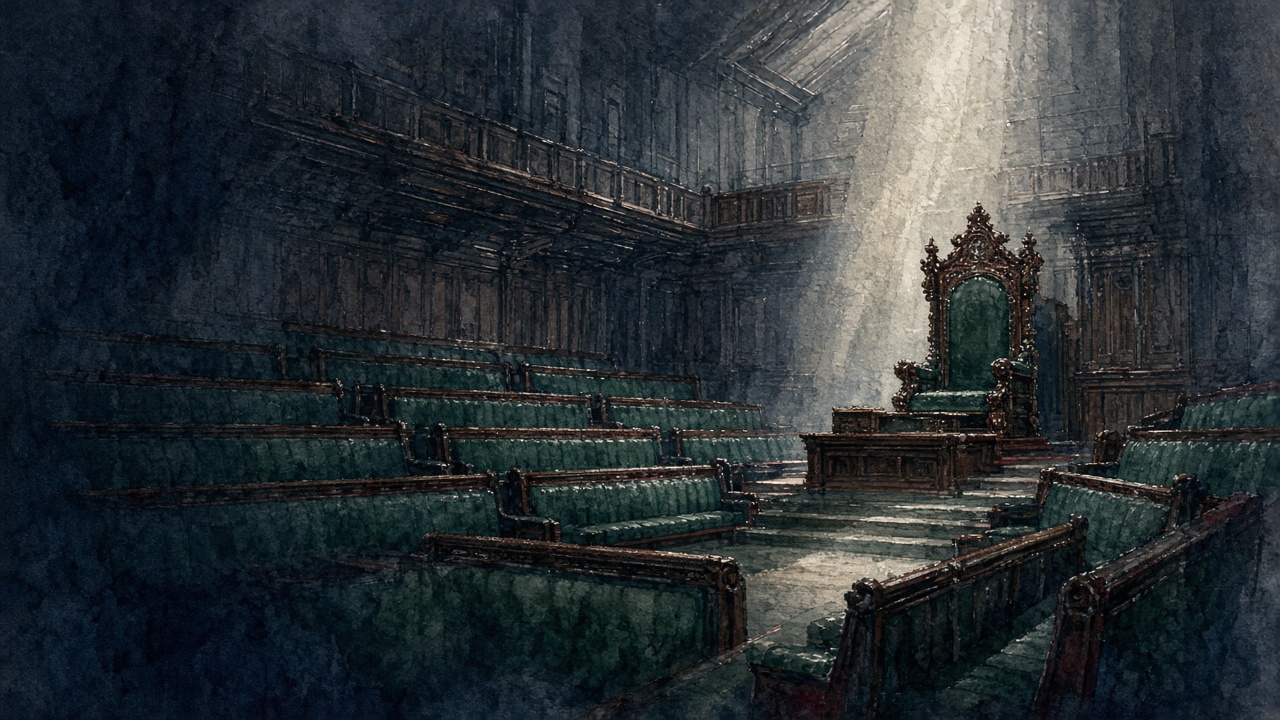
Ireland's escalating public sector pay dispute has claimed an unlikely victim: the Dail itself. Wednesday's sitting has been cancelled after it became clear that picket lines would be mounted at Leinster House, lines that opposition politicians immediately declared they would not cross.
The Houses of the Oireachtas, which runs the operations of Leinster House, had asked unions for a derogation so that normal business could proceed. The Taoiseach, Micheal Martin, publicly backed the request on Saturday, stressing the importance of parliamentary democracy. Within hours, however, it was clear no derogation would be granted, and a potential showdown over whether government members would cross a picket line was defused by simply shutting up shop.
A shorter week on Kildare Street
Under a revised schedule agreed by the Dail Business Committee, the lower house will sit on Tuesday and Thursday only, with votes taken on Tuesday rather than the usual Wednesday evening. A mooted additional Friday sitting has been shelved. Labour's Duncan Smith said the revised timetable recognised the principled position of those who would not cross a picket, but did nothing to change the underlying issue that has led to the strike.
A version of peace, as one official put it, has broken out at Leinster House. Resolving the broader dispute will take far longer.
The Strike at a Glance
- Some 300,000 public sector workers are due to take part in a one-day strike on Wednesday 14 October.
- Wednesday's Dail sitting has been cancelled; the house will sit on Tuesday and Thursday instead.
- More than 100,000 workers began a work-to-rule at the end of September; teachers, support staff, health workers and doctors join the stoppage on Wednesday.
- Schools are expected to close, and health appointments face widespread disruption.
- The Minister for Public Expenditure, Jack Chambers, says 1.2 billion euro was set aside in Budget 2027 for a new pay deal; unions dismiss the figure as far from enough.
Who is affected
The stoppage marks a sharp escalation of a dispute that began at the end of last month, when more than 100,000 public sector workers started a work-to-rule over pay. On Wednesday they will be joined by teachers and school support staff, closing most schools, and by health workers belonging to Siptu, Forsa and the Irish Nurses and Midwives Organisation, as well as members of the Irish Medical Organisation and the Irish Dental Association.
For working parents, the school closures present an immediate dilemma, and charities warn the pressure will only grow if further stoppages pencilled in for 21 October go ahead. Patients face cancelled appointments across the health service, with emergency cover only in many areas.
A deal that is not there yet
The previous public service pay agreement expired in June, and the two sides have been circling each other since. Mr Chambers has said a deal could have been struck by now, accusing the unions of walking away from talks after just two meetings. On Tuesday, as part of the budget, he announced that 1.2 billion euro was being set aside for a new agreement, a figure the unions dismissed as nowhere near sufficient.
Mediators remain hopeful that urgent engagement by the end of next week could prevent a hardening of positions. For now, though, the Republic faces its largest coordinated stoppage in years, and its parliament has become the first institution to rearrange itself around the picket lines.