
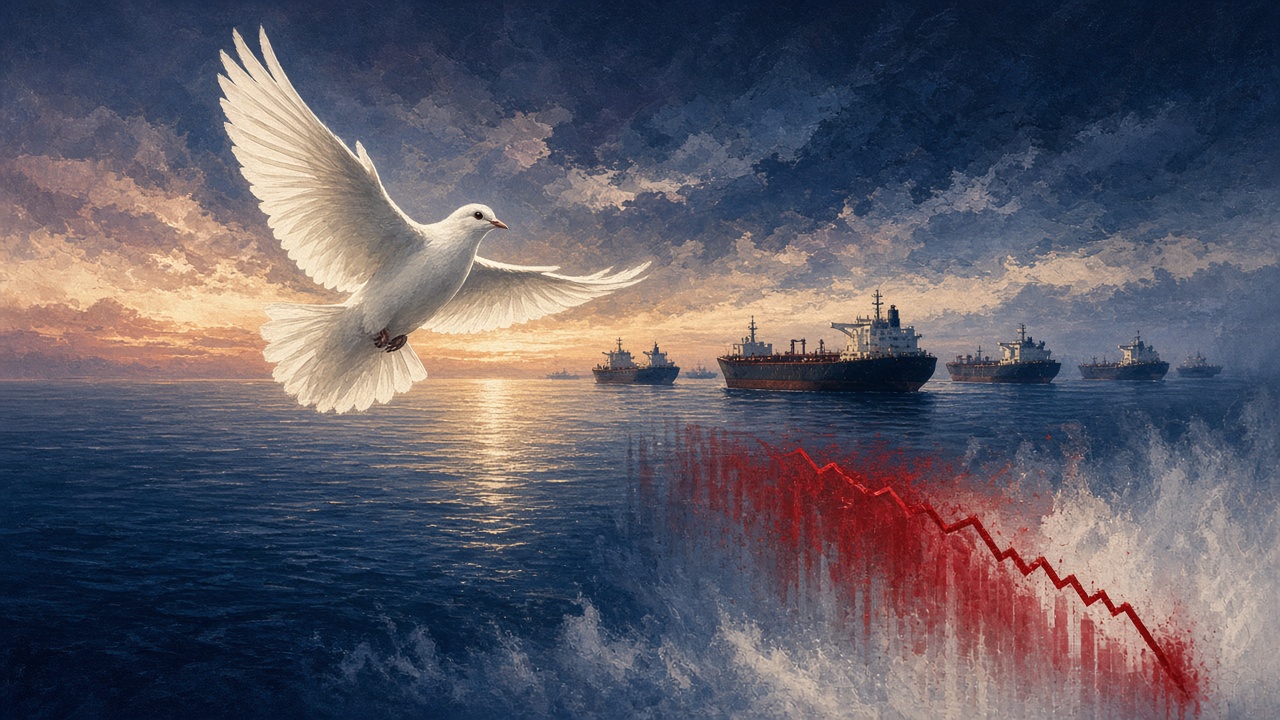
The United States and Iran have agreed an initial ceasefire, bringing a tentative halt to a war that closed the world's most important oil chokepoint, sent crude above 100 dollars a barrel and rattled every major economy.
The agreement, reached overnight on 7 to 8 April and including Israel, comes roughly five weeks after the war began on 28 February. It pauses, for now, a confrontation in which Iran closed the Strait of Hormuz, the narrow waterway through which about 20 per cent of the world's oil flows, and the United States answered with a reciprocal naval blockade.
Markets exhaled. Oil retreated from its peaks, shares recovered a portion of their losses and the frantic hedging of recent weeks subsided. Traders were quick to note, however, how little has actually been resolved: the ceasefire is initial, its terms are limited, and the strait remains more closed than open. Bond markets, which had spent five weeks pricing in a long war, unwound a little of that pessimism too.
The relief was visible in the City, where energy stocks gave back some of their war premium and the wider market steadied after weeks of nerves. Sterling firmed modestly. Yet the mood on trading floors was one of exhausted caution rather than celebration: this is the first pause in the fighting, not the end of it.
A truce with conditions attached
The weeks that followed brought continued brinkmanship between Washington and Tehran over restricted access to the strait. Convoys have moved under conditions that can change by the day, and each side has accused the other of testing the limits of the understanding. The fighting has stopped; the confrontation has not.
That distinction matters for prices. Oil markets trade on expectation as much as on supply, and the expectation of a lasting calm is not yet established. Every report of a challenged tanker or a rejected inspection feeds straight back into the crude price, and from there into the cost of everything that is moved, made or heated.
Shipping companies, insurers and governments now face a practical question with no clean answer: when is it safe to sail? War risk premiums remain elevated, and many owners will wait for more than a few quiet days before committing crews and hulls to the strait.
The Gulf Ceasefire at a Glance
- The US and Iran agreed an initial ceasefire overnight on 7 to 8 April 2026, with Israel included.
- The war began on 28 February and lasted roughly five weeks.
- Iran closed the Strait of Hormuz, through which about 20 per cent of world oil flows.
- Oil rose above 100 dollars a barrel, and the US answered with a reciprocal naval blockade.
- The weeks after the truce brought continued brinkmanship over access to the strait.
What it means at the British pump
For British households, the ceasefire offers hope rather than immediate relief. Pump prices respond to wholesale costs with a lag of several weeks, so the fall in crude will take time to reach the forecourt. The surge of the past five weeks, by contrast, is still working its way through the system. Motoring organisations urged drivers not to expect instant cuts, warning that retailers tend to pass on falls more slowly than rises.
The Bank of England, which had been weighing the inflationary consequences of dearer energy, will read the truce as a reason for cautious optimism rather than a signal to move. Inflation expectations, which had begun to drift upwards as the war dragged on, should steady if the ceasefire holds. That remains a large condition.
Energy bills tell a similar story. The price cap insulates households in the short term, but sustained wholesale rises feed through to the next adjustment. A lasting peace in the Gulf would be the single most effective cost of living measure available to any government this year; a fragile one still beats the alternative.
For now, the direction of travel is gently positive. Oil is cheaper than it was a week ago, the guns are quiet and the diplomats are talking. But until tankers move through Hormuz without escort or incident, the world economy remains one confrontation away from another shock.